


Emotional Incontinence in Women: Understanding Our Intense Emotions
- Dr. Sandra YENE AMOUGUI

- Feb 13
- 2 min read
Why hormones and evolution make us more sensitive at certain stages of life
Sometimes, the smallest thing can trigger tears, anger, or anxiety… and that is completely normal. Many women wonder whether they are “too sensitive” or “hysterical.” The reality is very different: these emotional fluctuations often have clear biological and evolutionary explanations.
Emotional incontinence — a term describing temporary emotional hypersensitivity — particularly affects women during certain stages of life, such as the menstrual cycle, pregnancy, postpartum, or perimenopause.

Hormonal Causes
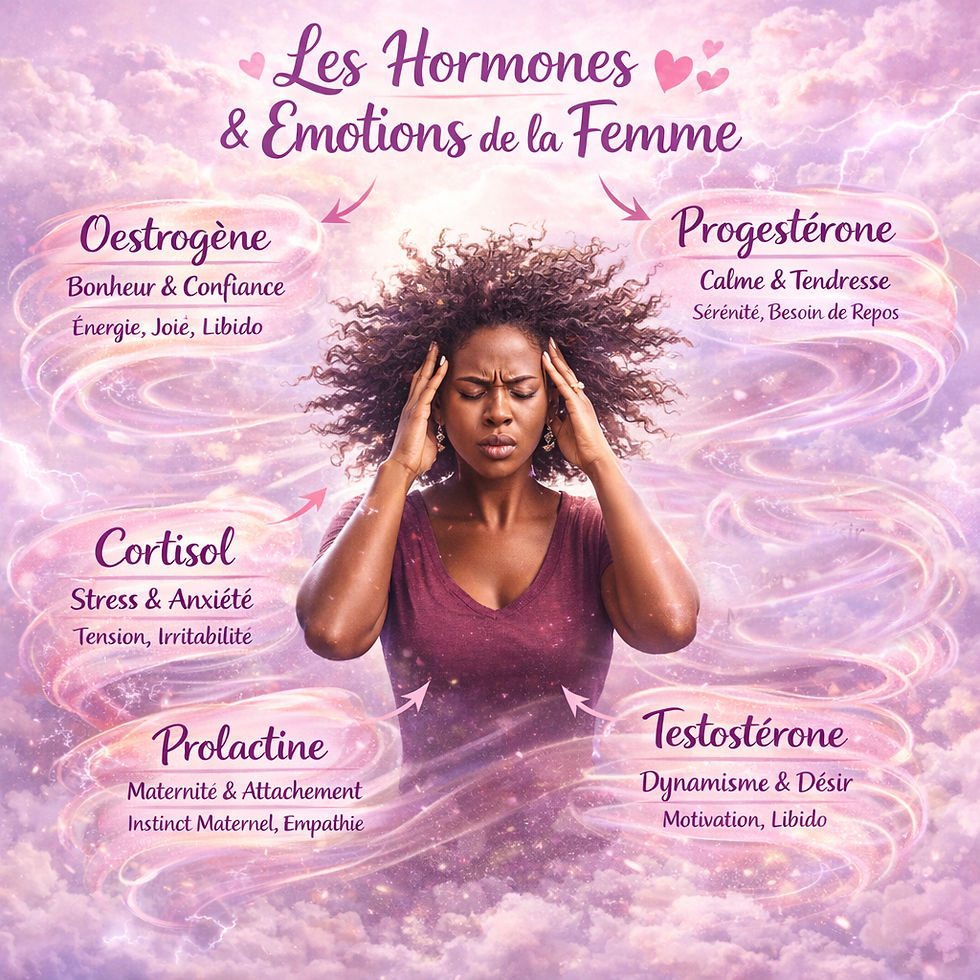
Our hormones play a major role in regulating emotions:
Estrogens and progesterone: influence mood and emotional perception throughout the menstrual cycle.
Prolactin: important during pregnancy and breastfeeding, enhances vigilance and empathy.
Cortisol: the stress hormone, which can amplify emotional reactions to everyday situations.
These hormonal fluctuations alter brain chemistry and can make certain situations feel emotionally intense — even if they may seem “small” to others.
Why This Is Useful from an Evolutionary Perspective
Why hasn’t this sensitivity disappeared over the course of evolution? Because it serves an adaptive function:
A more sensitive woman is more attentive to her baby’s needs, social signals, and potential dangers.
Emotional hypersensitivity promotes social cohesion, child protection, and community survival.
Being emotionally reactive is therefore not a weakness — it is an evolutionary tool designed to help manage complex and extreme situations.
When to Seek Medical Advice
Most emotional fluctuations are normal and temporary. However, professional consultation is recommended if:
Emotions become disabling (inability to work, socialize, sleep, or prolonged crises lasting more than two weeks).
Persistent signs of depression, severe anxiety, or hormonal imbalance are present.
Emotional reactions significantly interfere with daily or family life.
A healthcare professional can help distinguish between normal emotional variation and conditions that require medical support.
Conclusion
Our intense emotions are not a flaw — they are a natural superpower. Understanding their hormonal and evolutionary origins allows us to accept them and manage them more effectively.
Listening to your emotions, respecting yourself, and allowing yourself to be sensitive is not hysteria — it is strength and humanity.
Take care of yourself.
Kind regards,
Dr. Sandra Yene Amougui


Comments