


HOW MANY CESAREAN SECTIONS CAN YOU HAVE?

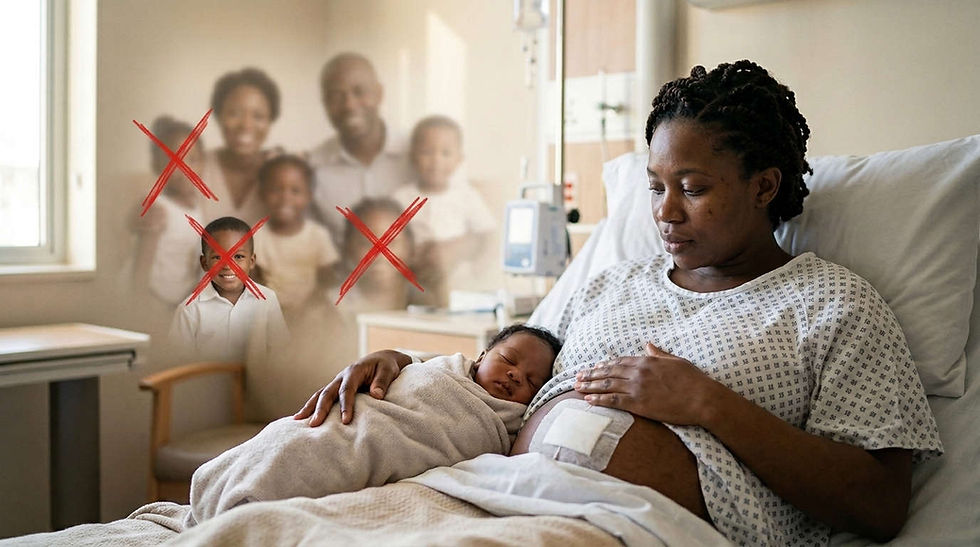
Do you dream of a large family, but you've already had a cesarean section? Is there a limit to the number of cesarean sections you can have? And at what point do the risks become significant?
This is a crucial question for women who want more than one child. There is no universal maximum number of cesarean sections, but the risks of certain complications increase with each additional procedure.
1. Why are the risks increasing?
Each cesarean section leaves a scar on the uterus and can cause adhesions, which are scar tissue formations between organs. Subsequent procedures can then become more complex.
The main complications are:
Significant bleeding , sometimes requiring a transfusion or a hysterectomy (removal of the uterus).
Placenta previa : placenta located too low, which may cover the cervix.
Placenta accreta : placenta abnormally adherent to the uterine wall, which can cause severe hemorrhage during childbirth.
Injuries to the bladder or intestine , particularly in the presence of significant adhesions.
2. Risks in figures: what do the studies show?
A large American study published in 2006, involving 30,132 cesarean sections, showed an increase in several complications with the number of previous cesarean sections.
Number of current cesarean sections | Risk of placenta accreta | Risk of hysterectomy |
1st | 0.24% | 0.65% |
2nd | 0.31% | 0.42% |
3rd | 0.57% | 0.90% |
4th | 2.13% | 2.41% |
5th | 2.33% | 3.49% |
6th grade or higher | 6.74% | 8.99% |
These figures represent the women in each study group. They do not allow for precise prediction of individual risk. The increase is not strictly uniform at each stage, particularly because the groups with five or more cesarean sections are smaller.
The most concerning risk involves the combination of multiple uterine scars and placenta previa. In this situation, the risk of placenta accreta observed in the same study was:
3% during the first cesarean section;
11% during the 2nd;
40% during the 3rd;
61% during the 4th;
67% from the 5th grade onwards.
These percentages only apply to women who also have placenta previa: they do not apply to all pregnancies after multiple cesarean sections.
3. Is there a maximum number of cesarean sections?
No. There is no absolute limit that applies to all women. Some have five or more cesarean sections with a favorable outcome. However, the risk of surgical and placental complications generally increases with the number of procedures.
A new pregnancy requires particularly careful evaluation in cases of a history of placenta accreta, severe hemorrhage, significant adhesions, surgical injury or high-risk uterine scarring.
The number of cesarean sections alone is therefore not sufficient to determine whether a new pregnancy is feasible. Medical history and individual assessment are essential.
4. Is it possible to give birth vaginally after a cesarean section?
After a cesarean section with a low transverse incision of the uterus, approximately 75% of women whose labor begins spontaneously are able to deliver vaginally.
The risk of uterine rupture is estimated at approximately 0.5% during an attempted vaginal delivery after a cesarean section, compared to less than 0.025% during a planned cesarean section.
After two cesarean sections, vaginal delivery may be considered for certain selected women, after specialist evaluation and in a maternity ward with immediate access to an emergency cesarean section.
After three or more cesarean sections, attempting vaginal delivery is generally not recommended according to RCOG guidelines, due to more limited data and potential risks.
The type of incision on the uterus is crucial: after certain incisions, particularly a vertical corporal incision, vaginal delivery is generally contraindicated.
5. Do you want to have several children after a cesarean section?
Having your first cesarean section doesn't mean your family life has to stop there. If you're planning more pregnancies, talk to your obstetrician-gynecologist as soon as possible.
The operative report, any possible complications, the type of uterine scar and your family plans allow us to assess the possibilities and anticipate the risks.
There is no magic number: the goal is to build a pregnancy plan adapted to your health, your wishes and your obstetric history.
Take care of yourself!
Sincerely,
Dr. Sandra Yene Amougui
Sources: Silver et al., Obstetrics & Gynecology, 2006; ACOG, Placenta Accreta Spectrum; RCOG, Birth Options After Previous Caesarean Birth.


Comments